Getting distracted isn't failing: how to come back with ADHD
One notification and your focus is gone. Here's why getting distracted is normal, why guilt makes it worse, and a simple way to notice, name it and return.
October 3, 2026 · 4 min read · By the Focus Planner team

You were finally focused. The task was moving. Then your phone buzzed, or a thought popped up, or someone said your name. Ten minutes later, you're somewhere else entirely, and here comes the familiar wave of guilt.
If that happens to you a lot, take a breath. Getting distracted isn't failing. It's what attention does. The real skill isn't never drifting; it's coming back.
Why distractions happen
Attention isn't a spotlight you can lock in place. It naturally moves toward whatever seems new, interesting or urgent. With ADHD, that pull can be stronger, and it can be harder to return once you've drifted.
Common pulls include:
- Your phone: notifications, or just the habit of checking it
- Your thoughts: a sudden idea, a worry, something you forgot to do
- Your body: hunger, tiredness, restlessness
- Your surroundings: noise, people, mess
- Your feelings: boredom with the task, or anxiety about it
None of these make you a bad worker. They're just part of being a person in a busy world.
Why guilt makes it worse
Here's the trap: you get distracted, feel bad about it, and then that bad feeling makes it harder to return. The task now carries a little shame with it. So you avoid it a bit longer, and the cycle continues.
Beating yourself up doesn't bring your focus back. Kindness does it faster.
When you treat a distraction as a normal event instead of a personal failure, coming back becomes a simple step rather than an emotional mountain.

How to come back: notice, name, return
1. Notice
The moment you realise you've drifted is actually a win. You caught it. Instead of "Ugh, I did it again," try a neutral "Oh, I drifted."
2. Name it
Briefly name what pulled you away: phone, thoughts, hungry, tired, noise. This takes two seconds, and it does two useful things: it turns a vague guilty feeling into simple information, and over time you start to notice your own patterns.
3. Return to one small step
Don't try to pick up exactly where you left off at full speed. Choose the tiniest next step: re-read the last sentence, open the file, write one line. Start a short timer if it helps; a countdown you can see makes time feel less slippery.
Small changes that reduce distractions
You can't remove every distraction, but a few small changes help:
- Put your phone face down, in another room, or on Focus mode
- Have water and a snack nearby before you start
- Use headphones or ambient sound if noise pulls you away
- Keep sessions short, so the next break is never far away
How Focus Planner helps you come back
Focus Planner treats distractions as a normal part of focusing, not something to be punished.
"What pulled you away?" When you pause a session, the app asks gently. Note it in one tap (phone, thoughts, hungry, tired, noise and more) or skip it. Either way is okay.
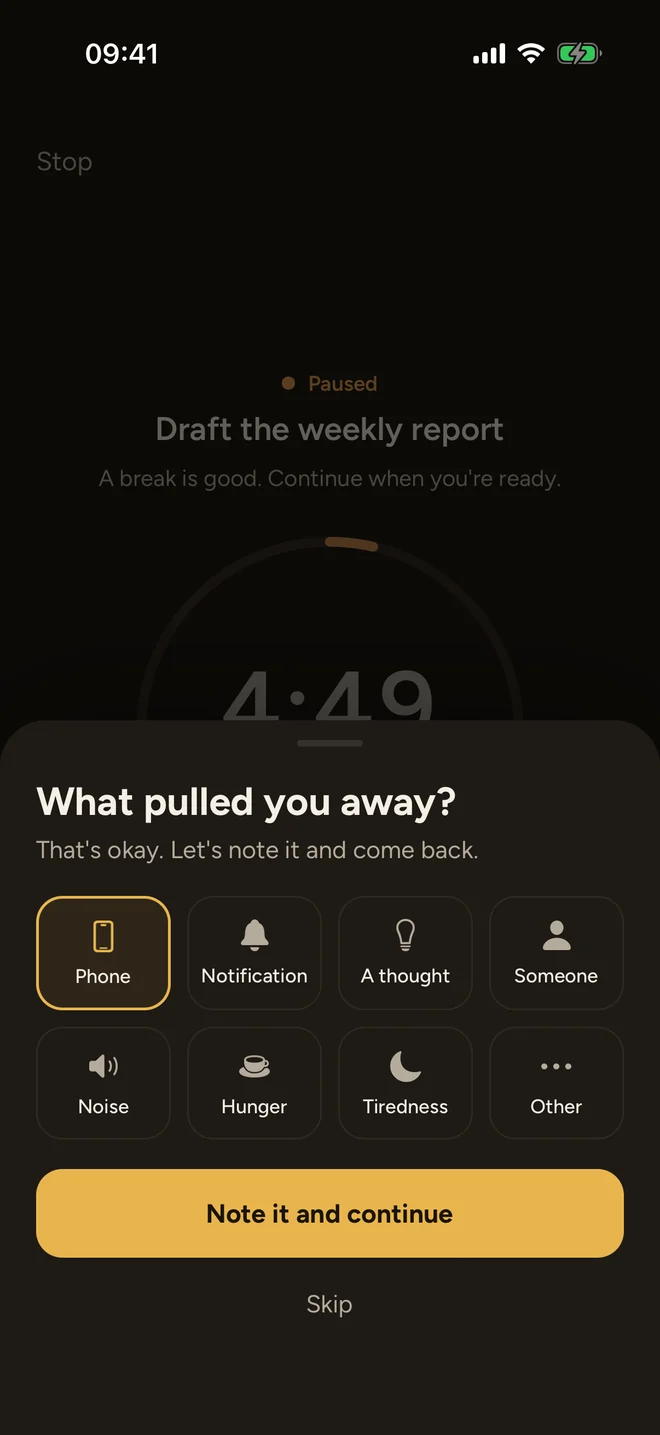
Breaks are fine. A paused session isn't a failed session. Continue when you're ready.
Welcome back, not guilt. Away for a few days? The app greets you with "Not where you left off. Just start here." and suggests a five-minute restart. Old tasks can move to "Someday" with one tap. Nothing is deleted, just out of sight.
A gentle reminder
You will drift. Everyone does. What matters is that you come back, and every time you do, you're practising the most useful focus skill there is. No lecture needed. Just one small step back in.
Frequently asked questions
Why do I get distracted so easily?
Everyone gets distracted, and many people with ADHD find it happens more often. Attention naturally moves toward whatever feels new or interesting, like a notification, a thought or a noise.
How do I refocus after getting distracted?
Notice that you drifted, name what pulled you away, and return to one small next step. Skipping the guilt makes coming back much faster.
Should I track my distractions?
A light note can help. Over time you might notice patterns, like always reaching for your phone or getting restless when you're hungry, and make small changes. Keep it quick and judgement-free.
How do I stop feeling guilty about losing focus?
Try treating distraction as information rather than failure. It tells you something about your energy, environment or the task. The skill isn't never drifting; it's coming back.
This article is general information, not medical advice. If ADHD is affecting your life, talking to a qualified professional can help.