Time blindness with ADHD: how to make time visible
"Just five minutes" turns into an hour, and deadlines appear out of nowhere. Here's what time blindness is, why it happens, and simple ways to see time instead of guessing it.
October 3, 2026 · 5 min read · By the Focus Planner team

"I'll just check one thing." You look up and it's been an hour. Or the opposite: you sit down to start something, feel like you have ages, and suddenly you're late.
If time keeps slipping through your fingers, you might be experiencing what many people call time blindness. It's not a sign that you don't care. It's a different relationship with time, and there are ways to work with it.
What time blindness looks like
Time blindness is a struggle to feel time passing or to estimate how long things will take. It's something many people with ADHD describe, and it can show up as:
- Being late even when you started getting ready "early"
- Underestimating tasks ("that'll take 10 minutes") again and again
- Losing hours to something interesting without noticing
- Deadlines that feel far away, until they suddenly feel impossibly close
- Feeling like there are only two times: now and not now
That last one is key. If something isn't happening now, it can feel vague and distant, which makes planning ahead really hard.
Why it happens
Most people have a kind of internal clock that quietly tracks time in the background. For many people with ADHD, that clock is less reliable. Attention gets pulled into whatever's in front of you, and the background sense of "how long has it been?" fades.
There's also the emotional side. When you've been late or missed deadlines before, time can start to feel stressful, so you avoid looking at it. And when you avoid looking at it, it slips away even more.
None of this means you're bad at life. It means guessing time doesn't work well for your brain, so it's better to stop guessing.

What helps: make time something you can see
1. Use a visible countdown
A clock tells you what time it is. A countdown tells you how much is left, and that's the information you actually need. A ring or bar that shrinks is even better, because you can understand it at a glance.
2. Work in short, fixed blocks
Open-ended work ("I'll do it until it's done") is where time disappears. Short timeboxes, like 5 or 15 minutes, give time edges (more on short timers for ADHD). When the block ends, you get a natural moment to look up and check in.
3. Estimate, then compare
Before a task, guess how long it will take. Afterwards, check how long it actually took. You don't need to fix anything; just noticing the gap over a few weeks makes your guesses better.
4. Plan with real durations
"Write email, call bank, tidy desk" looks small on paper. "15 min, 10 min, 20 min" tells you it's already 45 minutes. Putting numbers next to tasks turns a vague list into something you can actually fit into a day.
5. Build in transition time
Switching between tasks takes time too, often more than we expect. Leave a small buffer between things so one late task doesn't knock over the whole day.
How Focus Planner helps with time blindness
Focus Planner is built to make time visible without making it stressful.
A calm, visible timer. Every focus session shows a countdown ring that empties as you go. You don't have to feel the time; you just watch it.
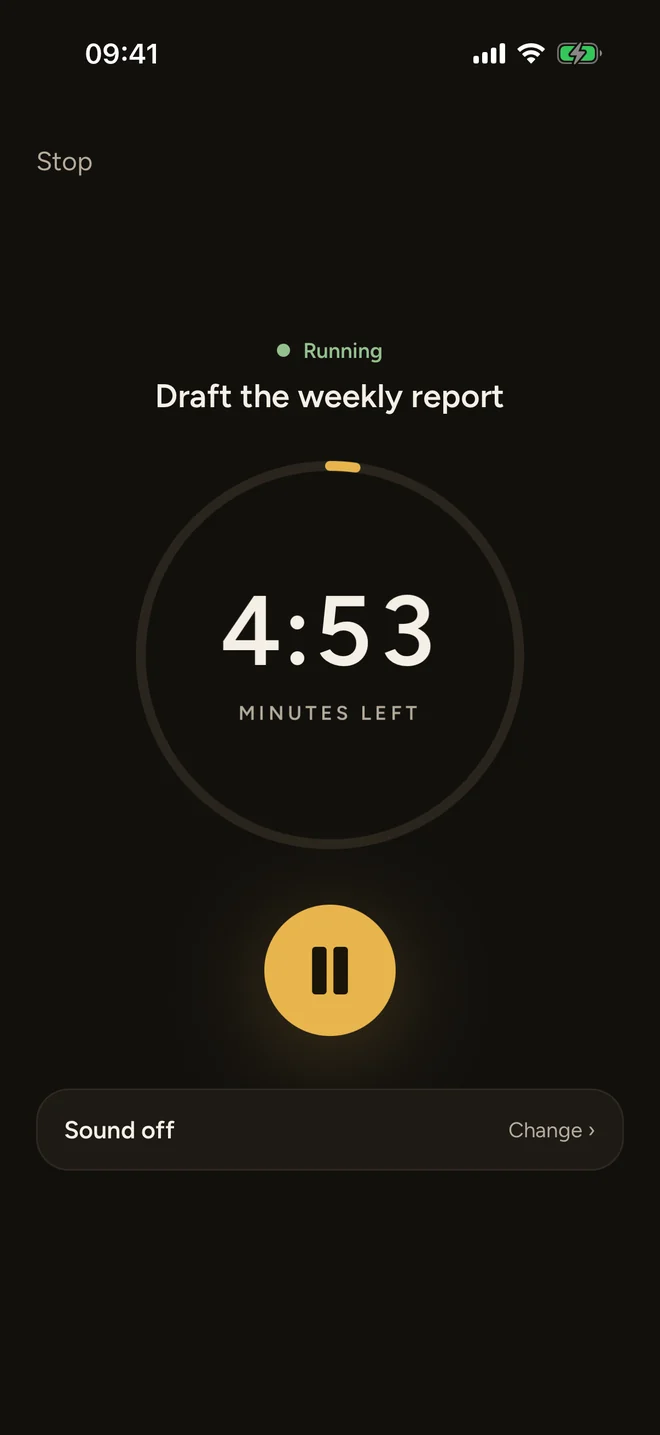
On your lock screen too. On iPhone, the countdown appears on your lock screen and in the Dynamic Island, so you can see your time even when the app is closed.
Short, fixed sessions. Pick 5, 10, 20 or 30 minutes, or set your own length. Short blocks give time clear edges, so it's harder for an hour to vanish.
See where your time went. Your Progress screen shows how many minutes you focused each day. Over time, it becomes much easier to estimate what a "normal" day looks like for you.
See your day as time, not a list. Switch Today to the timeline view and your timed tasks become blocks on the clock, with a line for "now." You can see how much of the afternoon is actually left. Tasks without a time wait above it, under "Anytime."
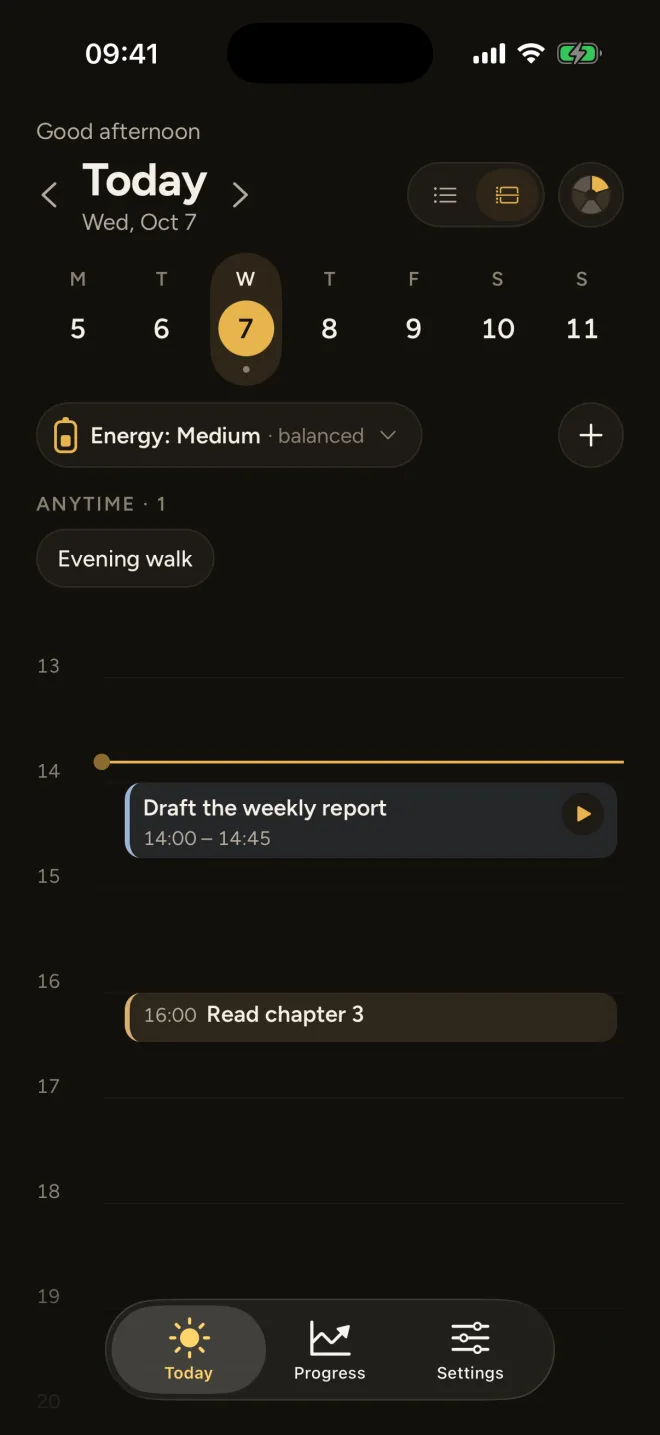
A nudge at the right time. Give a task a start time and the app reminds you when it comes up, so you don't have to keep checking the clock.
A gentle reminder
If time keeps getting away from you, you're not careless. You're trying to feel something your brain doesn't track easily. So don't rely on feeling it: put a timer where you can see it, keep sessions short, and let the countdown do the work.
Frequently asked questions
What is time blindness?
Time blindness is a common way to describe difficulty sensing how much time has passed or how long something will take. Many people with ADHD say five minutes and fifty can feel almost the same.
Is time blindness a symptom of ADHD?
It isn't a formal diagnostic term, but many people with ADHD and researchers describe differences in time perception. If it affects your life a lot, a professional can help you understand what's going on.
What helps with time blindness?
Making time visible tends to help the most: a countdown you can see, short timeboxes instead of open-ended work, and planning with real durations rather than guesses.
Are visual timers better than regular timers for ADHD?
Many people find them easier, because a shrinking ring or bar shows how much time is left at a glance. You don't have to do the maths or 'feel' the time; you just look.
This article is general information, not medical advice. If ADHD is affecting your life, talking to a qualified professional can help.