A guilt-free way to plan your week with ADHD
Rigid weekly plans fall apart by Tuesday, and then the guilt kicks in. Here's a loose, forgiving way to plan your week that bends instead of breaking.
October 3, 2026 · 4 min read · By the Focus Planner team

Sunday evening, you make a beautiful plan for the week. Every day is filled. You feel organised and hopeful. By Tuesday, it's already falling apart, and by Thursday you've stopped looking at it because it just makes you feel bad.
Sound familiar? The problem probably isn't you. It's the kind of plan.
Why rigid plans break
Most planning advice assumes a predictable week: steady energy, accurate time estimates and no surprises. With ADHD, real weeks look different.
- Energy goes up and down. A plan built for your best day won't fit your hard days.
- Time estimates are slippery. If tasks take longer than expected (and they often do, thanks to time blindness), a tight schedule collapses.
- Surprises happen. One unexpected errand can knock over a whole day of plans.
- Missed tasks pile up. Every unchecked item feels like proof that you "failed," which makes you avoid the plan entirely.
A plan that only works when everything goes right isn't a plan. It's a wish list with guilt attached.
What a forgiving plan looks like
A guilt-free plan is loose on purpose. It gives your week a shape without locking you into a schedule.
1. Plan days, not hours
Instead of "Tuesday 10:00–11:00: write report," try "Tuesday: write report." You still know roughly when it'll happen, but you decide in the moment when to start.
2. Use simple buckets
You don't need a calendar grid. Four buckets cover most things:
- Today: doable right now
- Tomorrow: a fresh start
- This week: a flexible buffer
- Someday: no rush
3. Plan less than you think
Pick two or three meaningful things per day, at most. If you finish early, great: you can always pull something forward. It feels much better to add tasks than to drag unfinished ones along.
A good plan leaves room for a bad day.
4. Move things without guilt
Didn't get to something? Move it to another day, or to Someday. That's not failing; that's adjusting. The plan is there to serve you, not the other way around.

5. Do a tiny weekly check-in
Once a week, take five minutes. Look at what's coming up, move anything that no longer fits, and pick one or two things that really matter. Keep it short, so it never becomes another chore you avoid.
How Focus Planner keeps planning gentle
Focus Planner was built around loose, forgiving plans.
Your week at the top of Today. A simple week strip sits above your day, and days with something planned get a small dot. Tap any day to see what's on it. Empty days are just "an easy one."
A time only if you want one. When you add a task, choose Today, Tomorrow or any date. Most tasks can stay under "Anytime." If something needs a slot, give it a start time and a rough length, and the app reminds you when it's time.
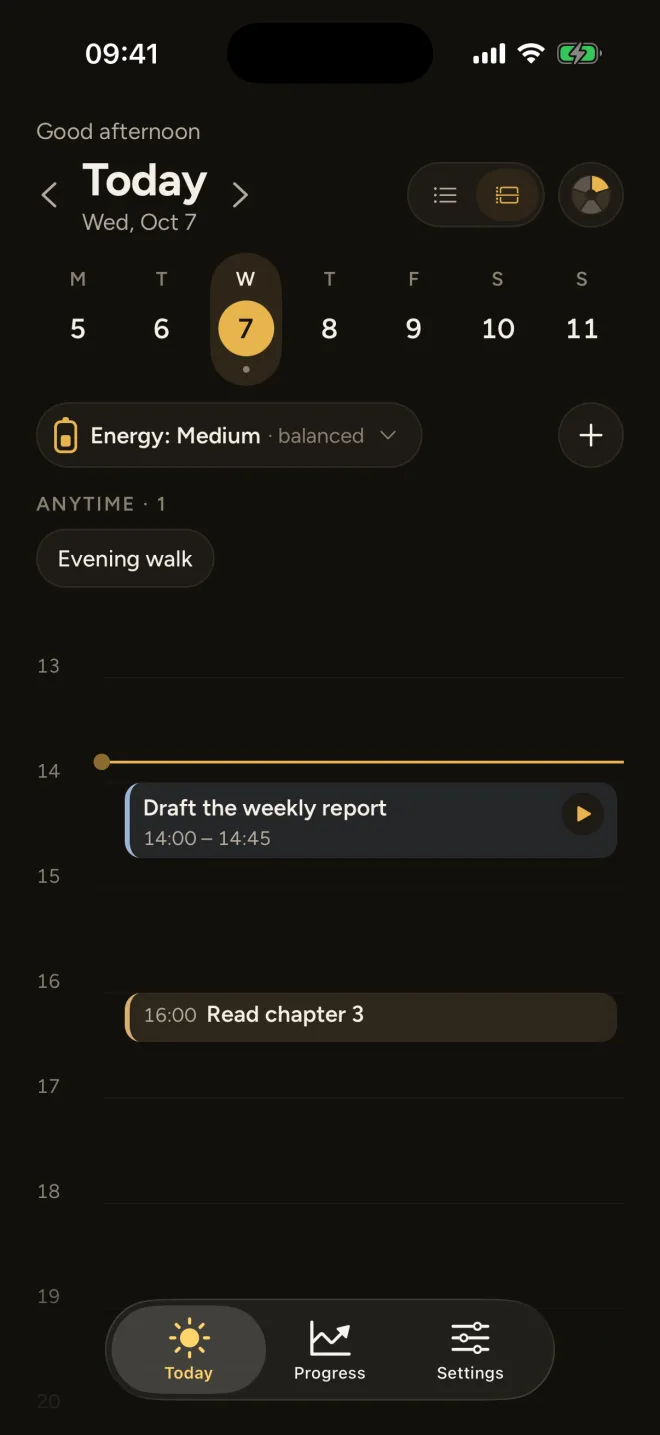
Ready early? Just start it. Press play on a task from any day. It joins today the moment the timer starts. No re-typing, no reshuffling.
No overdue guilt. There are no red overdue badges. If you come back after a few days, old tasks can move to "Someday" with one tap.
A gentle reminder
A plan that bends is better than a plan that breaks. Give your week a rough shape, plan less than you think, and move things around without guilt. The goal isn't a perfect week; it's a kinder one.
Frequently asked questions
Why do my weekly plans always fall apart?
Many plans are built for a perfect week: no low-energy days, no surprises, accurate time estimates. Real weeks aren't like that, especially with ADHD. A plan that leaves room for change is much more likely to survive.
Should I schedule tasks at specific times?
Some people love time-blocking, but for many people with ADHD, a looser plan works better: choose which day something belongs to, then decide in the moment when to do it.
What do I do with tasks I didn't finish?
Move them without judgement. Push them to another day, or to a 'someday' list if they aren't important right now. Unfinished tasks are information, not failures.
How many tasks should I plan per day?
Fewer than you think. Two or three meaningful tasks is plenty for most days. You can always pull more in if you have energy.
This article is general information, not medical advice. If ADHD is affecting your life, talking to a qualified professional can help.